|
|
|
|
|
» Blog Home
Updating you with the latest news and trends in skin rejuvenation treatment!
« February 2008 |
Main
| April 2008 »
March 2008 Archives
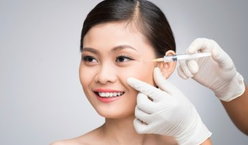
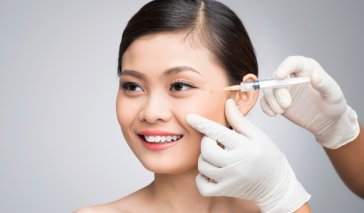
There are many concerns about Botox these days and that means that medical researchers are hard at work on trying to answer the questions that have come up about this form of cosmetic treatment. One such study took place recently at the University of Calgary and focused specifically on the way that Botox may spread throughout the body after it has been injected.
People formerly thought that a Botox injection into a muscle would result only in Botox affecting that particular muscle. That's why it allows for the reduction of wrinkles in the skin. However it turns out that there's a possibility that the Botox doesn't just stay in that one muscle and actually moves throughout the body. This may be a cause of some of the problems that people have experienced with Botox.
If it is indeed the case that Botox may spread after it's injected, a solution that medical researchers may work on is finding a way to reduce that spread in order to allow Botox to be used effectively with decreased risks to the body. In the meantime, you may want to ask your doctor about the alternatives that are available to you instead of Botox. With many other dermal fillers on the market, you may find that you like another product better than Botox anyway.
Question of the Day: What do you hope comes of all of the Botox research being done lately?
photo link
We have discussed in the past that there are some differences in the skin rejuvenation treatments that are sought by people with darker skin tones than by those with light skin tones. It has recently been revealed that those differences may make it more likely that African American populations will seek out anti-aging options for around the eyes at a younger age than their Caucasian counterparts. At the same time, this population may be able to avoid other skin rejuvenation treatments until later in life.
According to a recent study, the general characteristics of the African American face make it so that the average person in this population is likely to experience aging around the eyes at a younger age than will his or her Caucasian counterparts. This makes the people of this population a set of more likely candidates for dermal fillers that boost the look around the eyes.
At the same time, it is believed that the general health of this population's facial skin is better than that of other ethnic populations. As a result, this population may be less likely to seek out treatments such as chemical peels which are designed to reduce aging throughout the rest of the face. Of course, all people are different and these are generalities but they apply to a majority of the population studied thus far.
Question of the Day: What aspect of aging in the face concerns you most?
photo link
Most of what you're probably going to read about cosmetic dermatology procedures is news. You're also likely to read blog posts about the topics that interest you most such as reviews of dermal fillers that you're considering using or informative articles about treatments like laser hair removal.
However, it's also good to give yourself something of an education in the more academic or professional reading material that is available to you on these topics. Those books and DVDs which are designed for professionals in the field can give you some real insight into the pros and cons of each treatment, insight that you can't get from a short news article or blog post.
Here are several books that fall into this category which you might consider buying to get this kind of education:
- Cosmetic and Clinical Applications of Botox and Dermal Fillers
- Milady's Aesthetician Series: Botox, Dermal Fillers and Sclerotherapy (Milady's Aesthetician)
- Injectable Fillers in Aesthetic Medicine
- Procedures in Cosmetic Dermatology Series: Soft Tissue Augmentation with DVD (Procedures in Cosmetic Dermatology)
- Facial Rejuvenation: A Total Approach
(Follow the links to get additional information on any of these books, each of which provides insight into a different aspect of skin rejuvenation treatment.)
Question of the Day: What kind of cosmetic reading material interests you most?
photo link
People today are highly interested in "second-generation" dermal fillers. These are the dermal fillers that have some of the same effects as Botox but which were created in more recent years. They are preferred by people who are concerned about the negative effects of Botox and who are seeking a solution which will allow them to plump and smooth their faces with fewer risks.
Of course, there's never zero risk when it comes to any medical procedure including the use of these dermal fillers. Because of this, it's always important that you discuss all procedures with a knowledgeable doctor before getting them done. Additionally, you should be looking to external information resources to learn more about the dermal fillers that you are interested in using.
One resource that you might want to be bookmark is InjectableSafety.org. This is the website of the Physicians Coalition for Injectable Safety, a group of board-certified physicians who are committed to the goal of making sure that dermal fillers are safe for consumers. Their biggest focus is on making sure that only qualified professionals are able to give these treatments in order to maximize the safety of their widespread use.
There are many different aspects of this site where you can get information that will help you out. Perhaps the most useful section is "ask your doctor" where the site provides a list of great questions to ask a doctor before getting work done. These questions are geared towards making sure that this doctor is trained and experienced in the work that you are going to have completed.
Ultimately, it's up to you to make sure that you're protecting yourself from the work of bad doctors. But it's nice to know that there are good doctors out there who are working to offer more protection.
Question of the Day: What other resources are there to provide dermal filler consumers with information?
photo link
There's a press release floating around right now for a new wrinkle-removing treatment that's calling itself the Botox Hit Man. The product, which is called GFX, is designed to do exactly what Botox does but to do it better. Rather than using injectable botulism toxin, GFX uses radiofrequency waves to relax your wrinkles away. Another nickname that this product's been dubbed is "No-tox".
"How does GFX work? This minimally-invasive, in-office procedure utilizes a specified dose of radiofrequency (RF) thermal energy, delivered through an insulated bipolar needle inserted near the eyebrows, on either side of the forehead. First, the doctor delivers a stimulating pulse through the needle to identify the appropriate motor nerve. Once the target is properly isolated, a radiofrequency burst reduces the nerve's functioning ability." (source)
There are several reported benefits of GFX in comparison with Botox. Although the type of treatment that is used is one of the biggest benefits (because it's believed to be less risky to the health than Botox), there are also immediate benefits. That's meant quite literally since GFX takes effect immediately. Additionally, one GFX treatment may last up to six times as long as one Botox treatment does which means that you don't have to go in so often to get your skin looking smooth.
Question of the Day: What concerns or questions do you have about GFX?
photo link
One of the first questions that you are likely to ask any kind of doctor about any type of procedure is: "will it hurt?" We all want to get certain work done whether for cosmetic or medical reasons but we don't want to do it if it's going to cause us unnecessary pain. That's particularly true of cosmetic procedures.
For the most part, the work that you'll get done to enhance your appearance at a skin rejuvenation doctor is not going to be very painful. These are outpatient procedures that don't requier anesthesia. They are minimally invasive so it's just going to be the pinch of a needle or the sting of a laser that you'll have to sit through for a moment when getting this kind of work. However, you'll probably want to reduce that pain as much as possible.
A recent press release for a topical anesthetic points out that these can be a great way to eliminate the pain of shots and lasers. Chances are that your doctor already uses these when you go to get procedures like dermal filler injections or laser resurfacing. But it doesn't hurt to ask if they're going to be used or if there are other options for minimizing your pain. Being pretty doesn't have to hurt.
Question of the Day: Are you afraid of the pain of cosmetic treatments?
photo link
One of the most popular treatments available today is laser hair removal. As such, it's no surprise that there are a lot of people who are interested in skipping the doctor's visit and getting this work done in the comfort of their own homes. Those people have been happy to learn recently that the FDA approved the first laser hair removal kit intended for at-home use. However, it should be noted that this machine is designed only for some minimal hair removal and will not ultimately replace that trip to the doctor's office that you were probably already planning to cancel. It is primarily advertised as a tool to be used between professional visits.
This doesn't mean that you shouldn't use the system (which is called Tria). It's currently being used by consumers across the globe and tends to get favorable reports. However it is best for use on small patches of hair that you can see to laser yourself. For more in-depth laser hair removal, you are still going to want to get professional treatment. People interested in checking this out, though, can head to the Tria website and request to be placed on the mailing list for news about the official first release of the machine later this year.
Question of the Day: What piques your interest about the at-home laser hair removal option?
photo link
There has been a lot of interest in fat-dissolving treatments such as LipoDissolve which are designed to offer a minimally-invasive alternative to weight loss surgery. There has also been a lot of controversy about treatments such as this with many people reporting that the treatments simply don't work. The problem seems to be that many people don't realize that these are not really designed specifically to be weight loss treatments. Instead, LipoDissolve is intended as a fat-reduction tool for people who are basically in shape but suffer from certain problem areas of fat.
People who are overweight are not going to see a significant weight reduction from the use of a minimally invasive treatment. This really boils down to common sense. There aren't too many things in life that are "quick fixes". A non-invasive procedure can be useful for someone who doesn't need a lot of work done but the idea that someone who is morbidly overweight will achieve the same effects is akin to the idea that there's a magic pill out there for weight loss. It's just not realistic to think that you're going to get to do no work and reap all of the benefits.
LipoDissolve and the products on the market like it may be useful for people who have gotten into good shape and just need to lose that final bit of fat. For people who are truly overweight, plastic surgery / weight loss surgery is probably going to be a better answer. Either that or you really need to put the work in to lose the weight naturally. Them's the facts.
Question of the Day: Yay or nay on products like LipoDissolve?
photo link
Many people who are interested in getting treatments such as dermal fillers or laser resurfacing are dissuaded because of the cost of these procedures. Although cosmetic work is getting increasingly affordable, it's still yet another expense to work into your budget.
Here are some tips that can help you to pay for the cost of your treatments:
- Health insurance. Most cosmetic procedures aren't covered by insurance. However, some might be and you should check into it before going any further with making payments.
- Save up. Start setting 5% of every paycheck aside in a special savings account that's used specifically to pay for your treatments.
- Monthly installments. You can ask your treatment provider to allow you to make monthly installment payments if you can't pay for everything up front.
- Credit cards. You may or may not want to rely on credit cards for treatments since that debt can sometimes be evil but it's one option that you have at your disposal.
- Barter. You might have a service that your skin rejuvenation doctor could benefit from. Writing brochures, doing PR or helping out in the office could be a way to reduce the cost of treatments.
Looking beautiful has never been cheap. However, there's always a way to pay for the things that you really want.
Question of the Day: What would be your ideal method of paying for skin care treatments?
photo link
Botox parties used to be highly fashionable. They were primarily thrown at med spas which were interested in gaining new clients by offering a gathering place at their offices. People who were interested in Botox or other skin rejuvenation treatments could come to these parties to get information. If they liked what they saw, they could often start their treatments immediately.
However, Botox parties are on the decline. The Physicians Coalition for Injectable Safety has warned against getting any type of procedure done at a party such as this. They have also warned people not to accept cosmetic procedures like dermal fillers as a "prize".
You might still see Botox parties or injectables as prizes despite this warning. The real issue isn't whether or not you should attend these things. It's that you should always stay aware of the seriousness of the procedure.
There is never any harm in getting more information about the work that you might want to get done. However, there can be harm in making rash decisions based on the impulse that you can get it done immediately. Think through the treatments before getting them done and look into the background of your medical provider before treatments begin.
Consumers always need to be savvy, whether they're purchasing cookies or cosmetic procedures.
Question of the Day: Would you still attend a Botox party?
photo link
There are two major reasons that you are likely to consider seeking out a non-invasive cosmetic surgeon for dermal fillers. The first reason is that you are interested in anti-aging options which reduce the wrinkles on your face and smooth out your skin. The other reason is that you are interested in plumping up your lips or cheeks with dermal fillers.
However, there's another great use for dermal fillers that many patients aren't aware of. Dermal fillers can be used to alter the shape of the nose. This is effectively a way to get a "nose job" without having to actual undergo the invasive procedure known as rhinoplasty.
Essentially what you're doing with this type of procedure is injecting a dermal filler into the nose. The doctor then shapes or molds the dermal filler into the desired shape that you want the nose to have. This is a quick procedure which generally allows for immediate results.
Of course, dermal fillers aren't permanent so you'll have to get this procedure more than once. However if you're interested in changing your nose without having to undergo surgery, it could be something to consider.
Learn more about the details of this procedure here.
Question of the Day: Would you prefer to get rhinoplasty or a non-invasive nose job?
photo link
There is a case pending in Illinois in which a doctor may have to pay back a significant amount of money to the medical institute where he used to work. Apparently he decided to give out a whole bunch of Botox treatments for free so that his family and friends could improve their appearance without paying for the work.
It's not just the doctor that is in trouble either. The patients who knew that they were getting the work done for free are also listed as defendants in the case. Basically, the institute says that everyone knew that they were stealing the Botox and that they should all be punished for their participation in the theft.
In addition to seeking payment for the Botox that was used, the institute is seeking other damages as well. They want to get about three times what they would have gotten had the patients had paid up front for their Botox treatments.
This isn't the first case that we've seen of stolen Botox. Perhaps this is a commodity worth more value than people realize?!
Question of the Day: Should the doctor in this case have to pay back the exact amount of the procedure or additional compensation as well?
photo link
People who are interested in getting laser hair removal typically have a few basic questions. They want to know what it's going to cost them. They want to know how it is going to be done. and they want to know if it's going to hurt.
The answer to that latter question has typically been "not much". Laser hair removal is considered to be a fairly low-pain procedure. However, there has been some minimal pain associated with this work. It has frequently been described as a "small rubber band snap" sort of feeling.
However, even that minimal pain could be diminishing as laser hair removal treatments get more advanced. There are reports which indicate that the latest laser hair removal technology is designed to be pain-free.
As with any procedure, you should discuss all of your concerns with your doctor before getting laser hair removal. Ask specifically about the pain associated with the procedure and if anything can be done to reduce that pain. You will likely find that it's fairly easy to get this work done without a world of hurt.
Question of the Day: Do you think laser hair removal is likely to hurt?
photo link
Imagine that your child tells you that she wants to be a doctor when she grows up. What kind of doctor do you think that she would be interested in becoming? There's a good chance that she's going to be looking at the field of skin rejuvenation and dermatology if today's trends are any indication of what's to come.
A review of medical students completed recently shows that medical students are primarily interested in dermatology and plastic surgery when pursuing residencies to start their careers. Students in fields like internal medicine have nearly a one hundred percent chance of getting the residency that they desire. In comparison, the competition in the dermatology field makes it such that only about sixty percent of med students pursuing this kind of care will get their desired residencies.
This is good news for people who are interested in getting skin care procedures done. A higher level of competition means that only the most qualified and talented students will end up working in this field. This creates a higher caliber of doctor and allows consumers to rest assured that they are likely getting the best treatment possible.
Question of the Day: What do you think compels the interest of med students in pursuing work in skin care and plastic surgery?
photo link
It's really hard to guess which celebrities have had dermal filler work done and which haven't. That's because when it's done right, it's something that makes you look more natural and not something that looks like a cosmetic procedure. As a result, celebrity Botox is basically up to speculation unless the star admits to it herself or someone gets some bad celebrity Botox done.
In the realm of that kind of speculation, Awful Plastic Surgery suggests that Priscilla Presley might be getting Botox or something like it. They also suggest a number of other cosmetic procedures and plastic surgery work that she may (or may not) have gotten done over the years.
It's anyone's guess as to why Priscilla might have decided that Botox (or another dermal filler) was the right choice for her. However the article from APS mentions the fact that Elvis was no fan of the times when she would wrinkle her forehead. Reportedly he'd smack herin the wrinkle to remind her to turn that frown upside down. Could be that she was trained to dislike the wrinkles and decided that dermal fillers could be her cure.
Question of the Day: Do you think the celebrity Botox rumors about Priscilla Presley are true?
photo link
We mentioned just yesterday that there was some speculation going around that Priscilla Presley had gotten some sort of work done that was probably Botox. It turns out that it wasn't Botox that she got but was actually some other sort of dermal filler that had never been approved by the FDA.
Presley had received her injections from a nurse named Dr. Daniel Serrano here in the United States who was a doctor in Venezuela. This man was investigated by the police several years ago and was found guilty of importing the drug - a form of collagen treatment - into the United States. He was sentenced to prison at that time.
It's been several years since Priscilla Presley received her treatments from this nurse/doctor. Apparently the issue was all resolved back at that time but she is just now revealing that she was a victim of this type of medical fraud. It just goes to show us yet again that it's important for all people - famous or not - to make sure that they've reviewed the background of their doctors.
Question of the Day: What would your reaction be if you found out that you'd been receiving Botox-like injections that weren't medically approved?
photo link
Patients who are rapidly turning away from Botox are on the search for the right dermal filler to replace their former injections. They already have a number of different products to choose from but now a new one will be added to the mix. Prevelle Silk, a product created by a company called Mentor, has just received FDA approval and is getting ready to hit the market.
The new product is a hyaluronic acid dermal filler gel. Like other dermal fillers, it is designed to smooth the wrinkles in the face. Unlike many of the other dermal fillers on the market today, it includes lidocaine which numbs the area at the injection site and reduces the pain of getting the dermal filler shot.
Mentor is planning a slow, targeted launch of this product so it may not be available at your local skin rejuvenation doctor just yet. However, this company is planning a line of similar dermal fillers so you can expect to hear their name again soon (and you'll likely start to see their products emerge in your area).
Question of the Day: Would you be interested in trying out a new-to-the-market dermal filler or are you more likely to go with a name that you already know?
photo link
Guys used to have it easy when it came to grooming. They went in to get a cheap haircut every few weeks. They made sure to shave their faces in the morning before going to an important interview. They had a basic suit and tie that could cover most occasions. But times have changed and life is just not that simple anymore, at least not for professional men who want to move up in their careers.
Open the pages of any men's advice magazine from GQ to Details and you'll see information for men about taking care of their appearance in order to move up the ladder of success. That means more than just a simple shave; it means getting laser hair removal, skin resurfacing and other treatments that used to be just for the girls.
Learn more about this trend here.
Question of the Day: Do you approve or disapprove of the trend requiring men to get more active in the appearance department?
photo link
A cosmetic surgery doctors in the UK has spoken out strongly against the deregulation of cosmetic lasers, such as those used for laser hair removal, which is currently being considered by London regulators. He notes that although laser hair removal is basically a safe and non-invasive procedure, it remains a medical surgery and that's something that should be regulated for the safety of all patients.
The doctor, who has been performing laser surgeries in London for nearly twenty years, has seen cases of poorly executed laser hair removal. He cites a number of problems that it can cause including "patients ending up 'spotted' like a leopard with either circular patches of brown or black pigmentation or white patches of depigmentation". He notes that minor, but still bothersome, side effects of bad laser hair removal can include burning and blistering as well as scarring of the skin pigmentation.
It is also noted by the doctor that the laser hair removal specialist has an obligation to warn the patient about signs of cancer and other skin disease. This obligation is limited by the deregulation of laser hair removal because it allows for untrained people to make such assessments. This can reduce the ability of skin rejuvenation doctors to assist in playing a preventive health role for their patients.
Question of the Day: What do you think about the deregulation of laser hair removal?
photo link
This page contains all entries posted to In This Skin in March 2008. They are listed from oldest to newest.
February 2008 is the previous archive.
April 2008 is the next archive.
Many more can be found on the main index page or by looking through the archives.
|
|
|
|