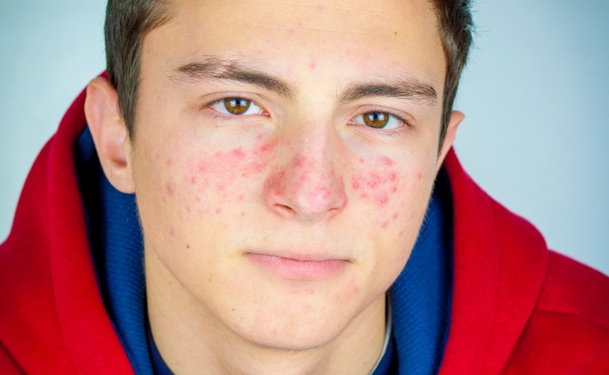
Acne is a very common condition caused by blocked oil glands on the face, neck, back, chest, and shoulders. Acne lesions are highly variable; common lesions include: small red bumps, white bumps (white heads), enlarged pores with a black center (black heads), large, painful, red nodules under the skin, and scabbed lesions. In people with darker skin tones (i.e. African-Americans, Hispanics, Asians, Middle-Easterners), acne lesions may be surrounded by an area of darker skin (called hyperpigmentation). This discoloration may last longer than the acne lesion itself and can draw more unwanted attention to the acne. Some types of acne leave scarring which is permanent.
What causes acne?
Acne is caused by blocked oil glands (called sebaceous glands). The sebaceous glands naturally produces oil called sebum which keeps the skin from drying out. During puberty, sebum production dramatically increases. Some of the oil glands become plugged and trapped oil builds up within the gland, causing inflammation. The swelling within the oil gland can become so intense that the oil gland (and associated hair follicle) can rupture, leading to further inflammation. Surging hormones during puberty is the most common cause of acne. Often, acne persists throughout puberty and then improves with adulthood. In some, however, acne never improves and may worsen during middle age. Women more often have acne in middle age and many believe this is caused from abnormal hormone levels. For example, many adult women with acne have excessive hair growth (i.e. on the face), irregular periods, and weight problems. There are studies that correlate acne with excessive quantities of milk, stress, and heredity. A bacteria called Propionibacterium acnes that is normally present on the skin likely plays a role in acne, but the precise link is still unclear.
What are the symptoms of acne?
Most mild and moderate acne has no symptoms other than the acne lesions. Severe acne, however, can be very painful.
How is the diagnosis of acne made?
Diagnosis of acne during puberty is usually straightforward. The type of lesion and the distribution of the lesions is usually characteristic. In adults, however, the diagnosis can be more challenging as acne can overlap with rosacea, allergic reactions, and some kinds of folliculitis. In adults, the underlying cause of the acne may need to be investigated as well.
What acne treatment options are available?
There are a multitude of treatment options available for acne. If you have not been able to control your acne with over-the-counter medications, you should visit your doctor and discuss treatment options.
Creams (topical therapies):
Effective over-the-counter medications usually contain benzoyl peroxide and/or salicylic acid formulations.
Mild irritation is a common side effect.
What prescription creams are available?
Many different prescription topical medications are available. In general, there are higher strength benzoyl peroxide washes and creams, antibiotic creams (i.e. erythromycin, clindamycin), and the vitamin A derivatives called retinoids. Retinoids (Trentinoin (Retin A), Adapalene (Differin), Tazerotene (Tazorac)), are very effective because they prevent the oil glands from becoming blocked. Retinoids can also improve the texture of the skin and even out skin color. When used properly, topical medications can be very effective for most people.
What are the risks?
The major down side to the topical medications is that they have to be used daily, sometimes for years. In terms of side effects, each medication has its own side effect profile. In general, the most common side effect is irritation and redness. You and your physician will decide on the right treatment for you.
What pills are used to treat acne?
When acne does not respond to topical medications or is severe, systemic medications (pills) are used. The tetracycline antibiotics are effective in many people. Erythromycin, Bactrim, and other antibiotics are second-line antibiotic therapies. However, long term antibiotic use can cause bacterial resistance in those who use them and should be used with caution. There are other side effects that must be discussed with your doctor. For women, oral contraceptives ("the pill") may also improve acne. For adult woman with acne, other hormonal therapies may be considered. For severe acne that is associated with scarring, isotretinoin (Accutane) is prescribed. This drug is very effective and can cure acne but must be used very cautiously because of the risk of severe birth defects when taken during pregnancy. There are other common side effects (dry lips, peeling skin, etc) of isotretinoin that may limit its use as well. Some people believe that isotretinoin can lead to suicidal symptoms. This is controversial and should be discussed with your doctor.
What are the risks?
See the above discussion and know that systemic acne medications have a long list of possible side effects and these need to be discussed in detail with your doctor.
Are there any new acne treatments available?
Light therapy, photodynamic therapy, laser therapy, and chemical peels are all being tried for the treatment of acne, with some initial success. See below for discussion of specific treatments. Because these treatments are new, you need to discuss all the treatment options with your doctor.
Light Therapy
Blue light therapy takes advantage of the fact that bacteria in the skin produce a product called porphyrin. Porphyrin can absorb blue light, leading to a chemical reaction in the skin that destroys the bacteria. Red light therapy can reduce inflammation in the skin which in turn improves acne. Acne lesions treated with light therapy tend to reoccur over 3-12 months. In one study, patients who had severe acne had no improvement compared to patients who had moderate acne who did improve. There have been no reported side effects.
Laser Therapy
Although there are many different lasers available only a few of them have successfully been used in the treatment of acne. For example, the pulsed-dye laser was tested in a randomized, double blinded controlled trial (the best kind of trial available) and was shown to significantly reduce acne after a single treatment with no serious side effects. The 1450 nm infrared laser has been used in one uncontrolled study and decreased lesion counts by 83% after three treatments. Temporary pain, redness, and swelling was reported in most patients. In patients with darker skin tones, hyperpigmentation (darkening of the skin) was reported.
Photodynamic Therapy (PDT)
This therapy combines a drug (called a photosensitizer) that is preferentially absorbed by certain kinds of cells and a special light source. When used together, the photosensitizer and the light destroy the targeted cells. For acne, the hyperactive sebaceous glands are targeted. The photosensitizer, called amino-levulinic acid, is applied to the skin and is left on for a variable period of time. The skin is exposed to the light source (blue, red, or laser light) and the photosensitizer is then removed. Side effects include pain during the procedure and discoloration afterwards.
Radiofrequency Therapy
A few studies have evaluated the effect of radiofrequency energy in the treatment of acne. One uncontrolled study reported a 75% improvement in 81% of the patients. Elamax, a topical anesthetic was used during the procedure for pain control.
Chemical Peels
Chemical peels have long been used for facial rejuvenation and to reverse the signs of aging. More recently, they have been used for the treatment of acne. In one study of Asian patients, salicylic acid peels performed twice a week for 12 weeks significantly improved acne.
Microdermabrasion
In a few preliminary studies, microdermabrasion treatments have reduced acne lesions and improved the texture of the skin in the majority of patients.
What can I do to prevent acne?
Throughout adolescence and into adulthood, we are bombarded with messages of how to correct acne inducing situations. We know what to do once we have a pimple attack- but how about the ways to avoid them in the first place? Here are some simple techniques aestheticians advise us of...
- Don?t pick, press or rub your pimples or white heads. This actually increases sebum production and ruptures the area below your skin. The infection and sebum will spread causing more pimples, not to mention the possibility of scarring.
- Wash twice daily, using a mild soap. Sulfur-based soap has been shown to be especially effective on acne. If your skin is too oily, use soap with benzyl peroxide. Do not use loofah?s, sponges, or brushes on your face. Avoid over-washing your face- it will actually stimulate your sebaceous glands to produce more sebum which will increase your acne.
- Allergies - diet may actually contribute to acne. For many people, food allergy can cause very serious acne-like condition. Note what triggers acne in your diet, and carefully avoid those items. Studies have shown that acne may also be caused by milk which contains hormones as well as seafood with relatively high levels of iodine. Other foods that have shown allergy - prone acne symptoms are: sugar, dairy products, deep-fried food, meat, nut butters, etc. Alternatively, green vegetables, vegetable juices and foods rich in zinc help alleviate acne condition and keep your metabolism running strong.
- Drink more water every day. Since our bodies are made up of water, it is easy to flush out toxins by drinking lots of water. It really helps heal and prevent acne flare-ups, not to mention keeping skin hydrated and glowing.
- Avoid an overindulgence of makeup. Makeup products may clog pores, causing more blackheads and pimples. If you have to wear makeup, make sure it is water-based. Many lines are in development to help people with sensitive, and acne prone skin. It also helps to clean your makeup brushes regularly.
- Acne prone people should avoid oily products. Products such as hair pomade, intense oil-based facial moisturizers, and oily cleansers may contribute to your break-outs.
- Avoid touching your face excessively. By regularly shampooing your hair and keeping it off your face, you can avoid external sources from contributing to acne.
- Exercising keeps your metabolism pumping and you will sweat out excess toxins.
- Practice serenity - stay stress-free. Studies show that stress may worsen acne flare-ups, in addition to your overall outlook on life. Talk to someone who can listen, participate in activities that bring you joy, or take a walk in the park with your dog. There are many things you can do to be stress free.
- Get outside. Sunshine stimulates vitamin D in the body, an essential vitamin for healthy skin. Fresh air and sunshine can help reduce stress and increase oxygen to the skin. Remember your sunscreen - skin that it burnt or tanned can contribute to black-head prone pores.