Almost everyone experiences acne at some point in their lives. For most people, acne is mild and goes away on its own. For others, it can be severe and long lasting. Scarring from severe acne can be permanent and disfiguring, so it's important to understand the causes of acne and the treatment options available.
Causes of Acne
Acne usually begins around the time of puberty. Acne may improve after puberty, but for many, acne persists into middle age.
Acne lesions form when the opening of oil producing sebaceous glands in the skin become blocked. Trapped oil builds up within the gland, causing inflammation. The swelling within the oil gland can become so intense that the oil gland (and associated hair follicle) can rupture, leading to further inflammation.
While the surge of hormones during puberty likely triggers this process, other factors such as stress and diet can influence the occurrence of acne. A bacterium called Propionibacterium acnes that is normally present on the skin likely plays a role in acne, but the precise link is still unclear.
Because of the risk of permanent scarring, any person with moderate or severe acne should be seen by a dermatologist to discuss treatment options
|
Dr. Michael H. Gold speaks on Acne.
|
Acne Treatment Options
Treatment for acne has improved dramatically in the last 2 decades. There are now many options available for different levels of severity and skin condition.
Over the Counter Topical Treatments
Effective over-the-counter medications include salicylic acid and benzoyl peroxide preparations. First line prescription acne treatment usually involves a combination of topical treatments, such as one of the retinoids, such as Retin A, and a topical antibiotic such as benzoyl peroxide mixed with clindamycin. Common side effects are irritation and redness, and you and your doctor will decide what is best for your individual needs.
Antibiotics
For acne that resists topical treatment, or for more severe acne, systemic treatments may be necessary. The tetracycline antibiotics are effective for many people. Erythromycin, Bactrim, and other antibiotics are second-line antibiotic therapies. However, long term antibiotic use can cause bacterial resistance, so they should be taken with caution. There are potentially other side effects that must be discussed with your doctor.
'The Pill' and Hormonal Therapies
For women, oral contraceptives, also known as 'the pill,' may also improve acne. For adult woman with acne, other hormonal therapies may be considered.
Isotretinoin (Accutane)
For severe acne that is associated with scarring, isotretinoin (Accutane) is prescribed. This drug is very effective for treating acne, but must be used very cautiously because of the risk of severe birth defects when taken during pregnancy. There are other common side effects (dry lips, peeling skin, etc) of isotretinoin that may limit its use as well. There have also been some cases of isotretinoin leading to suicidal symptoms. This treatment may considered controversial and should be discussed with your dermatologist.
New Treatment Options
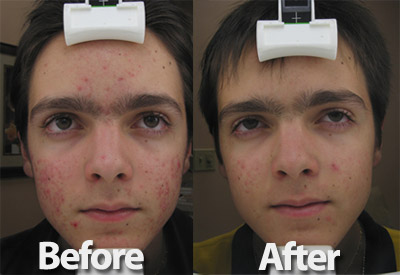
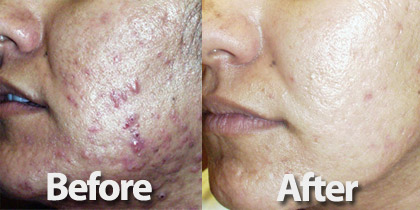
Because of the risks of systemic medications, newer, less invasive treatments are being explored. With the development of new cosmetic treatments such as lasers and light therapy, new acne treatments have also been developed. Because these methods are new, they are not as well tested. In early studies, most of the new treatments have proven to be mildly to moderately effective. The side effect profiles are usually minimal. The specific treatment modalities are discussed below. You and your doctor can discuss the best treatment to suit your individual needs.
Light and Laser Therapies
- Light Therapy
- Laser Therapy
- Radiofrequency Therapy
Chemical Peels
Microdermabrasion
All photos courtesy of S. Zimmet, MD and P. Bitter Jr., MD