Chemical peels, also known as chemical resurfacing, are cosmetic treatments to produce an improved appearance of the face. Chemical peels are used for the treatment of photoaging (from sun damage), wrinkles, scarring, acne, precancerous lesions, and discoloration (or dyschromia). Chemical peels produce controlled injury to the skin that promotes the growth of new skin with an improved appearance.
Many different chemicals are used including glycolic acid, trichloroacetic acid (TCA), salicylic acid, “Jessners” solution, and phenol. The different chemical solutions produce different degrees of injury to the skin. There are two layers of the skin; the outer layer is called the epidermis and the inner layer, the dermis. Superficial peels (e.g. glycolic acid) produce very superficial injury confined to the epidermis. Superficial peels can help improve conditions such as acne and dyschromia. Deeper peels (e.g. phenol peels) produce injury within the dermis and can reverse moderate-to-severe photoaging and wrinkles. In general, the deeper peels offer the most dramatic results but require longer recovery periods and carry a higher risk of complications.
Chemical peels have actually been used for hundreds of years and have a proven safety record in the proper hands. However, chemical peels are not for everyone. For example, people who are in poor general health should not get peels. Also, active infections and certain medications (i.e. isotretinoin (Accutane)) may preclude the use of certain types of chemical peels, especially medium and deep. Sometimes, people with abnormal scarring, certain skin diseases, or recent surgeries should not have a chemical peel. You and your physician should decide if chemical peels are safe for you.
Chemical Peel Procedure:
Chemical peels usually begin with vigorous cleansing of the skin. The depth of the peel depends on the chemical used. Very light peels (e.g. low potency glycolic acid, 10-20% TCA) only penetrate the dead skin cells that sit atop the epidermis and produce almost no injury. Sometimes, this level of peel is called “exfoliation”. Light peels (70% glycolic acid, 25-35% TCA) injure the entire epidermis and stimulate the regeneration of a new epidermis. This level of chemical peel may produce a burning sensation during the procedure. Recovery from light peels is quick- hence the name “lunchtime peel”. Improvement in the appearance of photoaged skin and scarring is usually subtle at best. Medium depth peels involve injury to the upper level of the dermis. Injury to the dermis stimulates the formation of collagen and “plumps” up the skin. Usually 35% TCA, in combination with another chemical such as glycolic acid, is used safely with minimal discomfort. Burning is the most common complaint during the procedure and this is usually well controlled with cool compresses or topical anesthetics. Deep peels involve injury to the mid dermis and are usually performed using a phenol solution. A deep chemical peel may offer dramatic results such as elimination of deep furrows and scars. However, complications such as scarring, permanent textural changes, darkening and redness of the skin can occur. Furthermore, during a deep peel, anesthesia must be used and vital signs must be monitored throughout the procedure. Recovery from a deep peel requires occlusive bandages and can take up to a month under normal circumstances. The phenol peel should only be performed by qualified physicians with proper monitoring equipment.
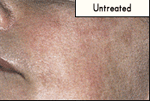
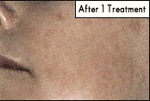
Before and Afters
  |
  |
» Find a Chemical Peel Specialist
All photos courtesy of S. Zimmet, MD and P. Bitter Jr., MD