
Hyaluronic acid is a natural substance found in skin and works to trap water and maintain the intercellular space within the dermis. In this way, hyaluronic acid helps in maintaining volume and shape in our face and lips. As our skin ages, hyaluronic acid, collagen and elastin are gradually lost from the dermis. The end result is volume loss, skin laxity, and wrinkles.
Hylaform is an animal based stabilized hyaluronic acid based dermal filler. It was FDA approved for the treatment of wrinkles in April 2004, but has been widely used in Europe and other parts of the world for many years.
Unlike Restylane, Hylaform is animal derived and carries a higher risk of allergic reactions. It is produced from specially bred rooster combs. It is purified, sterilized, and then chemically stabilized into a clear gel form.
Hylaform is used to replenish the dermal volume loss that allows wrinkles to form. It is also used to enhance lips and fill in acne scars. Because it is minimally modified, Hylaform has a low incidence of hypersensitivity reactions and requires no skin testing prior to treatment. The chemically stabilized hyaluronic acid found in Hylaform can remain in the dermis for up 6 to 12 months. This is longer than the collagen based dermal fillers.
The clear Hylaform gel is injected using a fine needle. It is injected into the dermis below the wrinkle and lifts the wrinkle out to the desired correction. Hylaform is injected directly into and around the lip for lip enhancements. Topical or local anesthetic is used to anesthetize the injection sites. Mild to moderate stinging and burning is common during the injection, while redness and swelling can last for hours or days after the injection.
Once injected, Hylaform integrates into the dermis and binds water. The results are immediate. It does nothing to hinder the normal metabolism and movement of nutrients and oxygen. Over time, Hylaform is gradually reabsorbed without a trace. For this reason, follow up treatments are needed to maintain your results at 6 to 12 month intervals.
The amount of Hylaform used during your treatment depends on the desired correction.
Side effects include redness, swelling, bruising, and injection site pain that may last for up to one week. Lip swelling and discomfort can be significant and asymmetry may be noted during the first one to two weeks. Also, small bumps of Hylaform may be palpated at the site of injection. These bumps are not usually visible, but can remain for several weeks or months after injection before gradually blending into the dermis.
Hypersensitivity to Hylaform is not common but may occur in individuals with bird allergies. A rare but more severe inflammatory reaction known as a granuloma can form in response to Hylaform injections and may require surgical management for treatment.
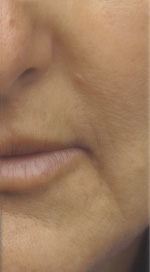  |
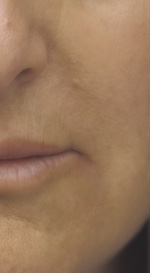  |
 |
 |