
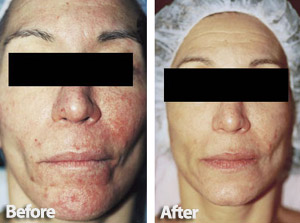
Dermabrasion
Mechanical resurfacing of the skin has been in use for about 50 years and involves the use of abrasive tools to remove the outer layers of the skin to produce an improved appearance. Dermabrasion has been used for the treatment of photoaging (from sun damage), wrinkles, scarring, acne, precancerous lesions, and perform discoloration (called dyschromia). Superficial and deep techniques are available. There are two layers of the skin; the outer layer is called the epidermis and the inner layer, the dermis. Superficial dermabrasion removes portions of the epidermis and deep dermabrasion removes all of the epidermis and portions of the dermis. Deep methods are the preferred method for treatment of scarring (i.e. from acne or trauma) and other less common skin conditions (i.e. epidermal nevi, rhinophyma, and benign tumors). It has also been used for removal of resistant tattoos. Deep methods are more effective but generally require healing time and carry a higher risk of complications.
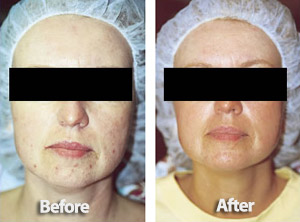
Microdermabrasion
Microdermabrasion, also referred to as the “lunch time” procedure, is a popular procedure which is classified as light, or very superficial dermabrasion. This method employs aluminum oxide crystals that are propelled at the skin and immediately sucked up. Although not scientifically proven to improve the appearance of skin, many patients report that their skin feels smoother. It is used to treat acne, dyschromias, and general “rejuvenation”. It is also popular because it is painless and there is no recovery time after the procedure. Newer devices now are crystal-less.
Manual dermasanding abrades the skin with silicone carbide sandpaper. This method is usually considered to be a medium depth procedure and is sometimes used in combination with other methods, such as chemical peels, carbon dioxide lasers, and motorized dermabrasion.
Motorized dermabrasion is a medium-deep or deep procedure and employs the use of a motorized brush or diamond cylinder. These tools are used to remove the outer layers of the skin in a controlled setting. Local anesthesia is used for pain control during the procedure. Dressings usually need to be worn after the procedure and temporary facial swelling and pain are normal. Within 7-10 days, the skin has healed but is often very red. Complete healing may take up to one month and collagen remodeling may continue for months after the procedure. Dermabrasion has been proven to improve the cosmetic appearance of the skin, especially in the treatment of scarring.
Not everyone is a good candidate for dermabrasion. Those with active acne, infections, and other scarring skin conditions may need treatment before undergoing dermabrasion. You and your physician need to decide if dermabrasion is the right procedure for you.
Complications are rare but include infection, prolonged healing, hyperpigmentation, and scarring.
» Learn the Difference Between Dermabrasion and Microdermabrasion