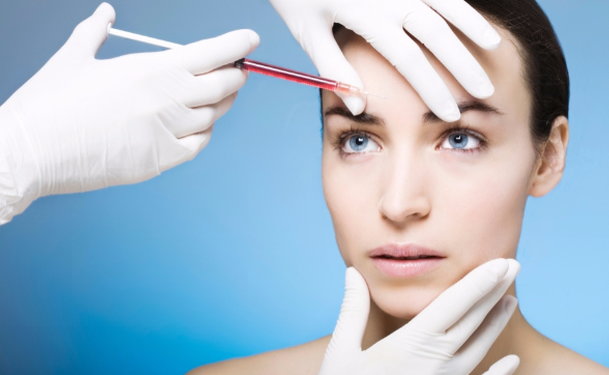
Dermal Fillers General Information
Dermal fillers are becoming increasingly popular as a means to help reverse the changes associated with aging.
As skin ages, the dermis gradually loses its major constituents: collagen, elastin and hyaluronic acid. Collagen acts as the major support protein for skin, elastin allows skin to stay firm and resist wrinkles, and hyaluronic acid helps to trap water and add volume and shape to skin.
Dermal fillers can give a more natural appearance than surgical face lifts. Dermal fillers can reduce or eliminate wrinkles, raise scar depressions, enhance lips, and replace soft-tissue volume loss.
Examples of Dermal Fillers
- Juvederm
- Restylane
- Perlane
- Prevelle Silk
- Elevess
- Radiesse
- Evolence
- Sculptra
- Cosmoplast
- Cosmoderm
- Artefill
Compare Types of Dermal Fillers
| Juvederm | Restylane | Perlane | Radiesse | Evolence | |
| What is it made of? | Hyaluronic Acid | Hyaluronic Acid | Hyaluronic Acid | Calcium Hydroxyl Apatite | Cross-linked Porcine (Pig) Collagen |
| What is it used for? | Nasolabial folds, lips, around the mouth, cheeks, etc. | Nasolabial folds, lips, around the mouth, cheeks, etc. | Nasolabial folds, lips, around the mouth, cheeks, etc. | Nasolabial folds, cheeks, temples, around the mouth. NOT IN THE LIPS | Nasolabial folds, around the mouth, cheeks, etc. |
| How many treatments are needed? | 1 | 1 | 1 | 1 | 1 |
| Is skin testing required? | No | No | No | No | No |
| How long does it last? | 6 to 12 months in the nasolabial folds, 3 to 6 months in the lips | 6 to 12 months in the nasolabial folds, 3 to 6 months in the lips | 6 to 12 Months | 6 to 12 months | 6 to 12 Months |
| Is there a risk for hypersensitivity? | rare | rare | rare | rare | rare |
| Where does it come from? | streptococcus bacteria | streptococcus bacteria | streptococcus bacteria | Synthetic | Purified Porcine (Pig) Collagen |
| Is it animal based? | No | No | No | No | Yes |
| How much does it cost? | $$/$$$ | $$/$$$ | $$/$$$ | $$$ | $$ |
| Sculptra | Prevelle Silk | Elevess | Cosmoplast & Cosmoderm | Artefill | |
| What is it made of? | Poly Lactic Acid | Hyaluronic Acid | Hyaluronic Acid with Lidocaine anesthetic | Human Collagen mixed with Lidocaine anesthetic | Poly Methyl Methacrylate (PMMA) and Bovine (Cow) Collagen |
| What is it used for? | Generalized Facial Volume in the Cheeks, Chin, and Temples | Fine lines, nasolabial folds, lips, lines around the mouth. | Nasolabial folds, lips, around the mouth, cheeks, etc. | Nasolabial Folds, Lips, and Fine Lines | Nasolabial Folds, Cheeks, Chin. NOT IN THE LIPS |
| How many treatments are needed? | Multiple over several Months | 1 | 1 | 1 | 1 |
| Is skin testing required? | No | No | No | No | Yes |
| How long does it last? | 2 to 4 Years | 2 to 6 Months | 3 to 12 Months | 2 to 6 months | More than 5 Years |
| Is there a risk for hypersensitivity? | rare | rare | Contains Sulfa and May cause allergic reaction for many people sensitive to Sulfa | rare | Hypersensitivity to the Bovine (Cow) Collagen requires skin testing |
| Where does it come from? | Synthetic Polymer of Lactic Acid | streptococcus bacteria | streptococcus bacteria | Purified Human Collagen | PMMA is synthetic and collagen comes from cows |
| Is it animal based? | No | No | No | No | The collagen is animal based |
| How much does it cost? | $$$$ | $$ | $$ | $ | $$$$ |